
Effective Mental Health Exercises for a Calmer Mind

Desire E
Mental wellbeing is shaped by many things, including relationships, sleep, physical health, daily pressures, life experiences, and access to support. When stress builds up, simple mental health exercises can offer a practical way to pause, notice what is happening, and respond more deliberately. They are not a cure-all, and they do not replace professional care when it is needed, but they can become useful skills for navigating ordinary stress and supporting emotional wellbeing.
This guide explores evidence-informed exercises you can try at home, at work, or while moving through your day. You will learn how to use gentle breathing, grounding, mindfulness, progressive muscle relaxation, journaling, movement, and self-compassion. The aim is not to feel calm every minute or to suppress difficult emotions. It is to build a flexible toolkit that helps you meet those emotions with awareness, care, and practical action.
Table of Contents
- Understanding Mental Health Exercises
- 1. Gentle Breathing Exercises
- 2. Grounding When Thoughts Feel Overwhelming
- 3. Mindfulness Without Trying to Empty Your Mind
- 4. Progressive Muscle Relaxation
- 5. Journaling to Understand Your Thoughts
- 6. Gentle Movement and Time Outdoors
- 7. Self-Compassion and Helpful Self-Talk
- 8. Structured Problem-Solving
- 9. Connection and Asking for Support
- Build a Routine That Fits Your Life
- A Gentle Seven-Day Starter Plan
- When to Seek Professional Support
- Frequently Asked Questions
- Trusted Resources and Further Reading
Understanding Mental Health Exercises
Mental health exercises are intentional activities that help you notice emotions, regulate stress, direct attention, reflect on patterns, or take constructive action. Some focus on the body, such as relaxed breathing or stretching. Others work with attention and thinking, such as grounding, mindfulness, or structured problem-solving. Social exercises, including reaching out to a trusted person, can also support wellbeing.
Stress is a normal human response to demands and uncertainty. It may affect sleep, concentration, appetite, mood, muscle tension, and digestion. A stressful response is not a personal failure; it is information that something may need attention. The World Health Organization recommends practical stress-management skills alongside supportive routines, adequate sleep, physical activity, and connection with others. Its guide, Doing What Matters in Times of Stress, offers brief exercises that can be practised in everyday life.
Different exercises help different people, and the same exercise may feel useful one day and less useful another. Evidence varies by practice, condition, and study quality. Mindfulness-based approaches and relaxation techniques have shown benefits for some people experiencing stress or anxiety, but they are not guaranteed to work for everyone. They should be viewed as tools to try and evaluate rather than promises of immediate relief.
A useful starting point is to ask: “What do I need right now?” If you feel physically tense, muscle relaxation or gentle movement may be a good fit. If you feel caught in a spiral of thoughts, grounding or journaling may help you create some distance. If a practical problem is driving your distress, a small problem-solving step may be more useful than another relaxation exercise. Choose the approach that matches the situation instead of forcing one technique to solve every problem.
1. Gentle Breathing Exercises
Breathing is one bodily process you can influence deliberately, which makes it a convenient focus when you want to pause. Slow, comfortable breathing may help some people settle their physiological arousal and redirect attention. Research into breathwork is promising, though studies use different methods and outcomes, so no single technique should be described as universally effective or guaranteed to stop anxiety.
Try five minutes of comfortable breathing
- Sit with your back supported, stand comfortably, or lie down if that feels better.
- Relax your shoulders and loosen anything that restricts movement around your chest or abdomen.
- Breathe gently through your nose if comfortable, then breathe out slowly through your nose or mouth.
- If helpful, count quietly to four or five on the inhale and again on the exhale. Use a count that feels natural rather than forcing a deep breath.
- Continue for about five minutes, keeping the breath easy. When your attention wanders, return to the next comfortable breath.
The NHS breathing guidance recommends practising a comfortable, regular breath for several minutes and making it part of a routine. The important point is ease, not taking the biggest breath possible. Overly deep or rapid breathing can make some people dizzy, tingly, or more anxious. If you feel uncomfortable, stop counting, return to normal breathing, and notice the room around you.
What about box breathing or 4-7-8 breathing?
Box breathing usually involves inhaling, pausing, exhaling, and pausing again for equal counts. The 4-7-8 method uses a four-count inhale, a seven-count hold, and an eight-count exhale. Some people like the structure, but these patterns are not necessary for breathing practice and may feel uncomfortable if holding the breath creates strain. Start with ordinary slow breathing first. Skip breath holds if they cause distress, dizziness, or breathlessness, and follow medical advice if you have a condition that affects breathing.
When to use it
Try a few comfortable breaths before a challenging conversation, during a work break, or as a transition between tasks. Breathing is a coping skill, not a way to prove that you should be calm. If the source of stress is an unsafe situation or an urgent practical problem, prioritise safety and appropriate action rather than focusing only on your breath.
2. Grounding When Thoughts Feel Overwhelming
Grounding exercises guide attention back to the present environment when worry, distress, or racing thoughts make it difficult to focus. They do not require you to argue with every thought or make uncomfortable feelings disappear. Instead, they help you reconnect with what is happening around you right now.
Use the 5-4-3-2-1 senses exercise
Pause and identify five things you can see, four things you can feel physically, three things you can hear, two things you can smell, and one thing you can taste. Adapt the sequence if a sense is unavailable or the exercise feels overwhelming. You might name the colour of a wall, feel your feet against the floor, listen for a nearby sound, or notice the temperature of the air.
Move slowly and describe each observation in plain language. For example, “I see a blue cup,” “I feel the chair supporting my back,” and “I hear a bird outside.” If counting senses feels difficult, simply name three things in the room. The aim is to orient attention, not to complete a test perfectly.
Ground through contact and orientation
- Place both feet on the floor and notice the support beneath them.
- Look around and name where you are and what you are doing.
- Press your hands gently together or hold a familiar object and notice its texture.
- Describe the next small action you will take, such as drinking water or opening a window.
Grounding is included in the WHO’s stress-management resources. It can be useful during everyday overwhelm, but it may not feel comfortable for everyone, especially if focusing on bodily sensations increases distress. If that happens, keep your eyes open, orient to neutral objects in the room, move to a safer environment if possible, or try another technique.
3. Mindfulness Without Trying to Empty Your Mind
Mindfulness means paying attention to present-moment experience with curiosity and less automatic judgment. It is not about stopping thoughts, staying positive, or achieving a perfectly blank mind. Thoughts will arise. The practice is noticing that they have arrived and gently bringing attention back to an anchor, such as the breath, a sound, or the feeling of your feet on the floor.
A three-minute mindfulness pause
- Notice: Take a moment to observe how you are feeling physically and emotionally. You do not need to change anything.
- Focus: Bring attention to the natural rhythm of breathing or to sounds around you.
- Return: When your mind wanders, acknowledge it with a simple phrase such as “thinking” or “planning,” then return to your chosen focus.
- Widen: Notice your body and the space around you, then choose the next action you want to take.
Try mindful walking
Walk at a comfortable pace and notice the sensations of lifting one foot, moving it forward, and placing it down. Feel the ground beneath your feet and notice the movement of your arms. You can also pay attention to sounds, colours, or the air on your skin. If you are walking outdoors, remain aware of traffic and other hazards; mindfulness should not distract you from safety.
Use mindful attention during an everyday activity
Choose an ordinary task, such as washing a cup, preparing a meal, showering, or drinking tea. Notice the colours, textures, sounds, smells, and movements involved. When you catch yourself mentally rehearsing tomorrow or replaying yesterday, return to the task without criticising yourself.
Research reviews suggest mindfulness-based programmes may help some people with anxiety, depressive symptoms, and sleep difficulties. Results depend on the programme and the person, and mindfulness is not a replacement for established care. Some people experience increased anxiety or other unpleasant feelings during meditation. If that happens, stop or shorten the practice, try an externally focused activity, and seek guidance from a qualified professional if symptoms persist.
4. Progressive Muscle Relaxation
Progressive muscle relaxation (PMR) involves gently tensing a muscle group and then releasing it, moving through the body one area at a time. It can help you recognise the difference between tension and relaxation and may reduce feelings of physical tightness. It is commonly taught as a relaxation technique, including in NHS guidance.
A simple PMR sequence
- Sit or lie in a supported position where you can relax for several minutes.
- Begin with your hands. Gently close them into fists for about five seconds without causing pain.
- Release the tension and notice the difference for around ten seconds.
- Repeat with another area, such as your shoulders, face, abdomen, thighs, or feet.
- Finish by letting your whole body rest and breathing normally.
Keep the tension mild. Do not tense an area that is injured, painful, cramping, or affected by a medical condition for which this movement is unsuitable. You can simply imagine the muscles softening instead. If lying down makes you uncomfortable, practise while seated or choose a different exercise.
PMR may be particularly useful after a demanding day or before sleep, when you notice that your jaw, shoulders, or hands have been clenched. With practice, you may recognise tension earlier and respond with a small release before it builds. The goal is awareness and comfort, not forcing your body into a particular state.
5. Journaling to Understand Your Thoughts
Writing can help organise thoughts that feel tangled, identify recurring stressors, and clarify what you need. Journaling is not a substitute for therapy, and it does not have to be long or beautifully written. A few honest sentences can be enough to reveal a pattern or identify one manageable next step.
Use a three-column check-in
Draw three columns labelled “What happened,” “What I noticed,” and “What might help.” In the first column, describe the situation briefly. In the second, record thoughts, feelings, and physical sensations without labelling yourself as weak or irrational. In the third, list a practical response, a person you could contact, or a need you can address.
For example, after a stressful meeting you might write: “I was asked to redo a task.” Then: “I felt embarrassed and noticed tension in my shoulders. I thought this meant I was failing.” Finally: “I can clarify the feedback, identify the next step, and take a short break before responding.” This separates an event from the meaning you assigned to it and gives you a chance to choose a response.
Questions for a short daily reflection
- What felt difficult today, and what made it difficult?
- What helped, even a little?
- What is within my control, and what is outside it?
- What do I need more of tomorrow: rest, movement, support, structure, or time?
- What is one small action I can take next?
Gratitude journaling is another option. You might write down one or two specific things you appreciated, such as a helpful conversation or a quiet moment. You do not have to pretend that a difficult day was good. Gratitude works best as an invitation to notice something meaningful alongside challenges, not as pressure to ignore pain or compare your circumstances with other people’s.
If writing about an experience makes you feel more distressed, stop and switch to a stabilising activity or speak with someone you trust. You can keep a journal private, use a secure digital document, or write and discard a page if retaining it does not feel safe. Choose the format that respects your privacy and circumstances.
6. Gentle Movement and Time Outdoors
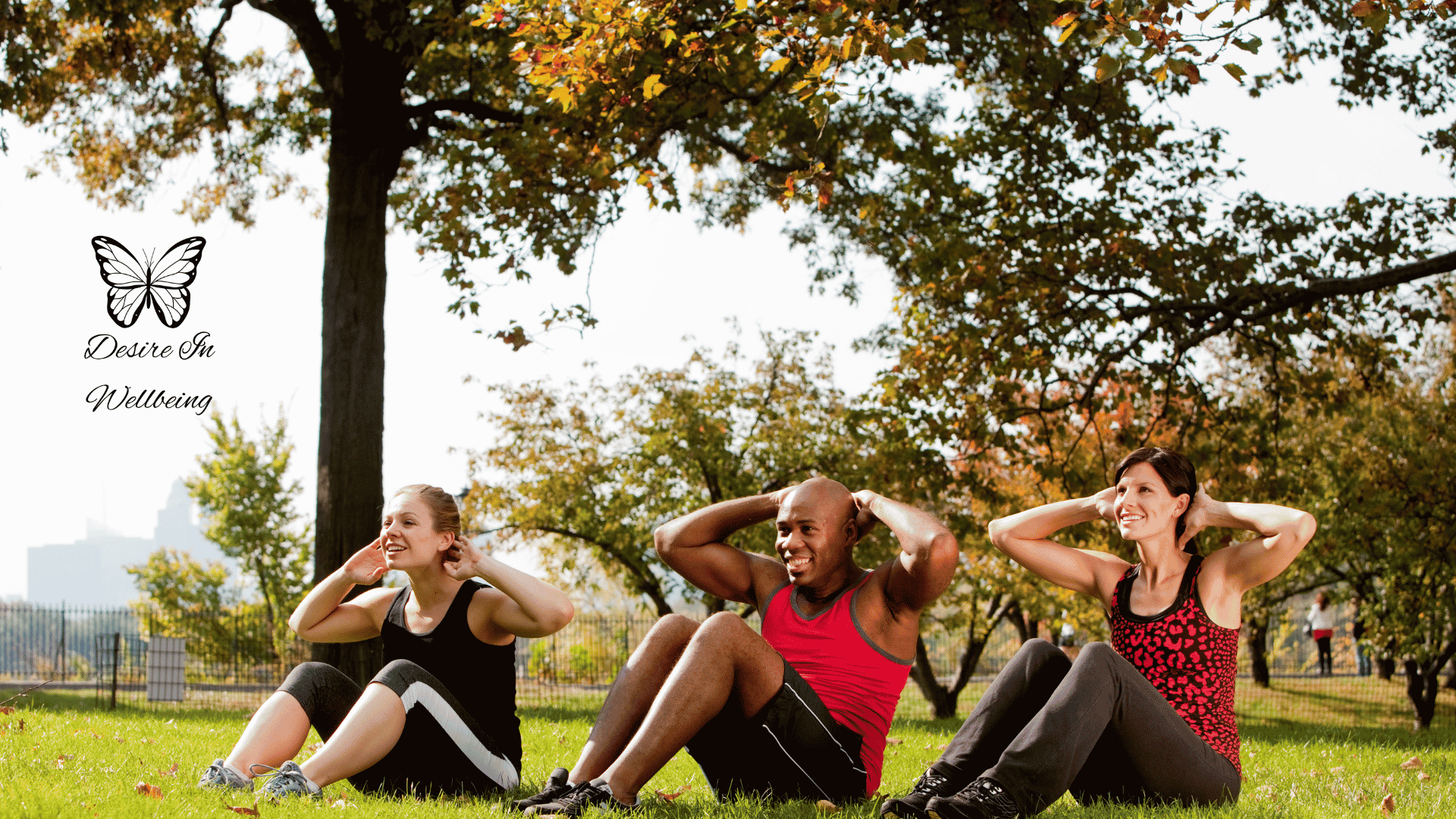
Movement can support both physical health and emotional wellbeing. It does not need to mean an intense workout. Walking, dancing, stretching, gardening, household tasks, or moving along to a favourite song may provide a change of pace and a break from repetitive thoughts. Regular physical activity is associated with benefits for mental and physical health, but the right activity depends on your ability, health, preferences, and access.
Try a ten-minute movement break
- Walk around your home, workplace, or a safe outdoor area at a comfortable pace.
- Stretch your arms and shoulders gently if doing so feels comfortable.
- Put on a song and move in a way that feels enjoyable rather than performance-focused.
- Do a small practical task, such as watering plants, while noticing your movement and breathing.
If you have been sitting for a long time, a brief movement break can help interrupt the day and give you a chance to check in with yourself. You do not need to reach a particular heart rate or step count for the break to be worthwhile. If you have mobility limitations, chronic pain, a disability, or medical advice about activity, adapt movement to your needs and seek professional guidance where appropriate.
Spend time outdoors when possible
If it is safe and accessible, spend a few minutes in a garden, on a balcony, under a tree, or in another outdoor space. Notice the sky, plants, sounds, or changing light. Outdoor time may offer a useful change of environment and an opportunity to move, but it is not a guaranteed treatment for mental health conditions. If you cannot get outside, looking through a window or tending to a plant may provide a small restorative pause.
Avoid using exercise as punishment or as a way to prove your worth. On low-energy days, a short and gentle activity—or rest—may be more appropriate than pushing through. The sustainable option is the one that supports your health without increasing harm.
7. Self-Compassion and Helpful Self-Talk
The way you speak to yourself can influence how you respond to mistakes, setbacks, and difficult emotions. Self-compassion means acknowledging that something is hard and responding with the kind of fairness and care you would try to offer someone you value. It does not mean avoiding responsibility or pretending that everything is fine.
Try the “notice, name, support” exercise
- Notice: Identify what is happening: “I am feeling anxious about this deadline.”
- Name: Acknowledge that this is a difficult moment: “I am under pressure, and it makes sense that I feel tense.”
- Support: Ask what would be helpful and realistic: “I can break the task into one small step and ask for clarification if I need it.”
If you catch yourself thinking “I always ruin everything,” try replacing it with a more accurate statement, such as “This did not go as I hoped, and I can work out what to do next.” Helpful self-talk should be believable, not artificially cheerful. You do not have to convince yourself that a problem is easy; you can acknowledge the difficulty while remembering that one event does not define your entire identity.
Another option is to imagine how you would respond to a friend in the same situation. Would you insult them, or would you help them understand what happened and identify a next step? You can offer yourself the same balanced response. If self-compassion initially feels uncomfortable, start with neutral language rather than forcing warmth. “This is difficult” can be a useful first step.
8. Structured Problem-Solving
Not all distress needs to be managed through relaxation. Sometimes anxiety is connected to a concrete problem: an unfinished task, a financial concern, a conflict, or uncertainty about a decision. In those situations, structured problem-solving can turn a vague sense of overwhelm into a sequence of manageable actions.
Use a small-step problem-solving method
- Describe the problem clearly. Write one sentence that focuses on the issue rather than judging yourself. For example, “I have three tasks due this week and have not prioritised them.”
- Separate facts from assumptions. What do you know? What are you predicting or fearing? What information is missing?
- List possible responses. Include practical options, asking for help, negotiating a deadline, or deciding what can wait.
- Choose one realistic next step. Make it small enough to start, such as sending one email or working for ten minutes.
- Review the result. Notice what changed and adjust the plan without treating setbacks as proof of failure.
For concerns outside your control, identify what you can influence and what support or boundaries may help. You may not be able to remove uncertainty, change another person's behaviour, or solve a large problem in one sitting. You may still be able to gather information, protect your time, ask for help, or decide how you will respond.
If you are too overwhelmed to think clearly, use grounding or a brief break first, then return to problem-solving when possible. If the issue involves danger, abuse, serious financial or legal risk, or an urgent health concern, seek appropriate help rather than relying on a self-help exercise alone.
9. Connection and Asking for Support
Mental wellbeing does not depend only on individual habits. Safe and supportive relationships can provide perspective, practical help, companionship, and a sense of belonging. You do not need a large social circle to benefit from connection; one trusted person or a supportive community can matter.
Try a small connection exercise: send a message to someone you trust, arrange a brief conversation, share a walk, or ask how another person is doing. If you need support, be specific where possible. You might say, “I have had a difficult week. Could you listen for ten minutes? I do not need you to solve it right now.” Clear requests can help the other person understand what would be useful.
If you do not have a trusted person available, consider a community group, peer-support service, faith or cultural community that feels safe to you, or a qualified health professional. Connection should not require you to tolerate mistreatment. Set boundaries with people who repeatedly dismiss, threaten, or harm you, and seek help if a relationship makes you feel unsafe.
Build a Routine That Fits Your Life
A mental health routine should support your life, not become another demanding project. Start with one or two exercises that seem manageable. Attach them to an existing activity, such as practising three comfortable breaths after making tea or doing a short body check before shutting down your computer. A reliable cue can make it easier to remember the practice.
Create a flexible routine for different parts of the day
- Morning: Take one minute to notice how you feel, stretch gently if comfortable, or write down the main priority for the day.
- During work or study: Take a brief break, relax your shoulders, or use grounding before moving to the next task.
- After a stressful event: Walk for a few minutes, write down what happened, or talk with someone you trust.
- Evening: Try a short PMR sequence, mindful activity, or a simple reflection on what you need tomorrow.
You do not need to do every exercise every day. A two-minute practice that fits your circumstances may be more sustainable than a long routine you quickly abandon. Keep a short record of what you tried and how you felt before and afterwards. Use the notes to learn which practices are useful, not to grade yourself or demand perfect results.
Make the practice accessible
If you have caregiving duties, shift work, limited privacy, disability, or a busy household, adapt the exercise to what is possible. You can practise grounding with your eyes open in a public place, use a brief pause instead of a long meditation, or write a few words rather than filling a journal page. If silence is uncomfortable, try a guided recording or focus on sounds in the environment.
Notice whether an exercise leaves you feeling more settled, neutral, or more distressed. It is okay to change methods. The goal is not to force a particular feeling but to develop responses that are safe and helpful for you. If a practice repeatedly worsens symptoms, stop using it and discuss alternatives with a qualified professional.
A Gentle Seven-Day Starter Plan
Use this plan as an experiment, not a strict challenge. Each activity can take two to ten minutes, and you can repeat, skip, or adapt any day. If you miss a day, simply continue when you are ready.
| Day | Practice | Reflection question |
|---|---|---|
| 1 | Try five minutes of comfortable, unforced breathing. | Did my breathing feel comfortable? What would I change? |
| 2 | Use a grounding exercise by noticing objects, sounds, and physical contact with the floor or chair. | Did this help me reconnect with my surroundings? |
| 3 | Practise three minutes of mindfulness during a quiet moment or everyday activity. | What did I notice when my attention wandered? |
| 4 | Try gentle progressive muscle relaxation, skipping any painful areas. | Where do I tend to hold tension? |
| 5 | Write for five minutes about a stressor and one possible next step. | What is within my control today? |
| 6 | Take a short walk, stretch gently, or choose another comfortable movement. | How did my mood or energy feel before and after? |
| 7 | Contact a trusted person or practise a self-compassion statement. | Which practice would I like to continue, if any? |
At the end of the week, look for useful information rather than a dramatic transformation. Perhaps breathing helped before a meeting, journaling clarified a decision, or walking gave you a break. You may find that some practices are not a good fit. That is valuable feedback. Choose one or two options to continue and revisit the plan when your circumstances change.
When to Seek Professional Support
Self-help exercises can complement professional care, but they are not a substitute for assessment or treatment when symptoms are persistent, severe, or interfering with daily life. Consider speaking with a doctor, counsellor, psychologist, or other qualified mental health professional if sadness, anxiety, irritability, panic, sleep problems, or difficulty concentrating continue, worsen, or make it hard to work, study, care for yourself, or maintain relationships.
You do not need to wait until things feel unbearable before asking for help. A professional can help you understand what may be contributing to your symptoms and discuss appropriate options, which may include therapy, practical support, lifestyle changes, medication, or a combination depending on your needs. If cost, location, stigma, or privacy is a barrier, consider whether a primary care provider, community health service, reputable nonprofit, or local support organisation can help you identify available options.
If you feel at risk of harming yourself or someone else, or you cannot keep yourself safe, seek urgent help now through local emergency services or the nearest emergency department. If possible, tell a trusted person and ask them to stay with you while you get help. Do not rely on a breathing or mindfulness exercise as the only response to an immediate safety crisis.
Mindfulness and relaxation are generally low-risk for many people, but not every practice suits everyone. Some people experience increased distress when focusing inward or revisiting difficult experiences. Stop an exercise that feels unsafe, orient to your surroundings, and seek professional guidance if the reaction continues.
Frequently Asked Questions
What is the simplest mental health exercise to start with?
Start with a brief grounding pause or comfortable breathing. Notice your feet on the floor, identify a few things you can see, and let your breath move naturally. Choose whichever feels easiest and stop if it makes you uncomfortable.
How long should I practise each day?
There is no single duration that works for everyone. You can begin with one to five minutes and increase only if it is helpful and manageable. Consistency can be useful, but a longer session is not automatically better, and you do not need to practise every day for an exercise to be worthwhile.
Can mental health exercises cure anxiety or depression?
No self-help exercise can be promised to cure an anxiety disorder or depression. Some practices may support stress management or reduce symptoms for some people, but outcomes vary. Persistent or impairing symptoms deserve professional assessment, and self-help can be used alongside recommended care when appropriate.
What if meditation makes me feel worse?
Stop or shorten the practice. Try an externally focused activity, such as naming objects in the room, walking safely, or talking to someone you trust. Meditation is not right for everyone, and worsening symptoms are a reason to choose a different approach and seek professional guidance if needed.
Do I need special equipment or an app?
No. Most exercises in this guide require only a few minutes and a place where you can pause safely. A timer, notebook, or free guided recording may be helpful, but they are optional. Be cautious about apps or services that make exaggerated medical claims or request more personal information than you want to share.
Can I do these exercises at work or in public?
Yes. You can try quiet breathing, grounding through your senses, a brief walk, or a short written check-in. Choose an activity that suits the setting and keeps you aware of your surroundings. You do not need to close your eyes or disclose private feelings to other people.
How do I know which exercise is working?
Notice small changes in tension, attention, emotional intensity, or your ability to choose a next step. You may not feel instantly calm. Try the same practice a few times in different situations, if it feels safe, and record what you notice. If it consistently increases distress, stop and try another approach.
What should I do if I do not have time for a routine?
Use small moments already present in your day: one breath before answering a message, grounding while waiting, or a short stretch between tasks. If you are overloaded, the most helpful action may be to reduce a demand or ask for support rather than add another habit to your schedule.
Trusted Resources and Further Reading
For further learning, start with organisations that explain the evidence, limitations, and practical use of these approaches:
- World Health Organization: Stress — information about stress, common effects, and practical ways to cope.
- World Health Organization: Doing What Matters in Times of Stress — an illustrated self-help guide with grounding, unhooking from difficult thoughts, and other skills.
- NHS: Breathing Exercises for Stress — a simple, comfortable breathing practice.
- NHS inform: Progressive Muscle Relaxation — practical instructions and advice about adapting the exercise.
- National Center for Complementary and Integrative Health: Meditation and Mindfulness—Effectiveness and Safety — an overview of research findings, uncertainty, and potential adverse experiences.
- National Center for Complementary and Integrative Health: Mind and Body Practices — evidence summaries for several mind-body approaches.
- Fincham, Strauss and Cavanagh (2023), Effect of coherent breathing on mental health and wellbeing: a randomised placebo-controlled trial — a research study of paced breathing, useful for understanding both the promise and the limits of the evidence.
A Final Note on Your Wellbeing
A calmer mind does not mean a life without stress, sadness, uncertainty, or difficult thoughts. It means gradually learning ways to notice what is happening, respond with care, and take the next useful step. Begin with one exercise that feels safe and realistic. Adapt it to your life, pay attention to how you respond, and allow your routine to change as your needs change.
Health disclaimer: This article is for general educational purposes only and is not a diagnosis or a substitute for individual medical or mental health advice. The exercises described may not suit everyone and cannot guarantee relief. Seek support from a qualified health professional for persistent, severe, or worsening symptoms, and use local emergency services if there is an immediate safety risk.