
Essential Yoga Exercises to Boost Strength and Balance

Desire E
Discover how targeted yoga exercises can transform your physical strength and balance while supporting your overall health and wellness journey.
In This Guide
- Understanding Yoga
- Why Yoga Is Your Secret Weapon for Building Functional Strength
- Foundation Poses That Develop Core Stability and Balance
- Standing Sequences to Enhance Lower Body Power and Coordination
- Advanced Poses for Upper Body Strength and Muscle Endurance
- Creating Your Personalized Yoga Practice for Long-Term Results
Understanding Yoga
Yoga is an ancient practice that originated in India over 5,000 years ago, combining physical postures, breathing techniques, meditation, and philosophical principles to create a holistic approach to wellness. The word 'yoga' comes from the Sanskrit root 'yuj,' which means to unite or yoke, representing the connection between mind, body, and spirit. What began as a spiritual discipline has evolved into a globally recognized practice that millions of people incorporate into their daily lives for physical fitness, mental clarity, and emotional balance.
At its core, yoga is much more than just stretching or exercise—it's a comprehensive system designed to promote overall well-being. Modern yoga typically focuses on asanas (physical postures), pranayama (breath control), and dhyana (meditation). These elements work together to create a practice that is accessible to people of all ages, fitness levels, and backgrounds. Whether you're seeking improved flexibility, stress relief, or enhanced athletic performance, yoga exercises offer a versatile foundation for achieving your wellness goals.
Research on yoga suggests possible benefits for selected outcomes, including balance, flexibility, some measures of strength, sleep and stress-related well-being. The strength of evidence differs by outcome and population, and yoga styles and study methods vary considerably. Yoga should not be described as proven to lower blood pressure, improve immunity or prevent disease in everyone. It can be one part of a broader movement routine, alongside aerobic activity and appropriate muscle-strengthening exercise.
Yoga developed over a long period in South Asian religious and philosophical traditions. Its history is complex, and modern postural yoga is not identical to every earlier form of yoga. Contemporary classes vary widely: gentle or chair-based sessions may emphasize mobility and breathing, while flowing or power styles can be physically demanding. Hatha is often used as a broad label for posture-based practice; Vinyasa links movement with breath; Iyengar commonly emphasizes alignment and props; and Ashtanga follows a structured sequence. Names are not guarantees of intensity or suitability, so ask what a class involves before joining.
Why Yoga Is Your Secret Weapon for Building Functional Strength
Yoga poses can challenge muscles through body-weight support, controlled movement and static holds. They may develop muscular endurance, coordination and body awareness, particularly when a pose is appropriately challenging and practiced progressively. However, not every yoga class provides the same strength stimulus. Traditional resistance training makes it easier to increase load in a measurable way, and may be needed to develop strength beyond what a person's body weight and chosen poses provide. Yoga can complement resistance exercise rather than needing to compete with it.
Some yoga movements involve controlling the body while muscles lengthen, while held postures involve isometric contractions. These are useful ways to challenge muscles, but yoga does not automatically prevent injuries or protect every joint. The demands depend on the posture, range of motion, pace, technique and the individual's capacity. A supported, pain-free variation is often more useful than forcing a deeper shape.
Yoga also excels at building strength through isometric holds, where muscles contract without changing length. Holding poses like warrior II or chair pose for extended periods builds remarkable muscular endurance and mental fortitude. Isometric holds can develop muscular endurance and tolerance for sustained positions. They are only one training method, however; building strength usually requires a progressive challenge over time, adequate recovery and appropriate nutrition. Longer holds are not automatically better, and a pose should be shortened or modified if form deteriorates or discomfort develops.
Perhaps most importantly, yoga cultivates proprioception—your body's ability to sense its position in space—which is fundamental to functional strength. Better proprioception means improved coordination, balance, and movement efficiency. This enhanced body awareness allows you to recruit the right muscles at the right time, maximizing strength output while minimizing wasted energy and injury risk. As you progress in your yoga practice, you'll notice improvements not just in how much you can lift or how long you can hold a pose, but in how gracefully and efficiently you move through all aspects of life.
Foundation Poses That Develop Core Stability and Balance
Mountain Pose (Tadasana) is a simple way to practice upright posture and awareness of how your weight is distributed. Stand with feet comfortably apart, knees relaxed, and arms by your sides. Keep your gaze on a steady point and breathe naturally. Avoid rigidly tucking the pelvis, locking the knees or forcing the shoulders back. If standing balance is difficult, practice near a wall or sturdy chair. Hold for several comfortable breaths rather than aiming for a fixed duration.
Plank Pose challenges the trunk, shoulders and arms. Begin on hands and knees, then step one foot and the other back only if you can keep a comfortable, controlled position. Hands can be placed on a stable elevated surface to reduce the load on wrists and shoulders. Keep breathing; do not let the lower back sag. Hold for a few breaths, rest, and repeat if comfortable. A short, well-controlled hold is preferable to a long hold with pain or loss of form.
Boat Pose (Navasana) can challenge the abdominal and hip-flexor muscles. Sit with knees bent and feet on the floor, lengthen the spine and lean back slightly without collapsing the chest. If comfortable, lift one foot or both feet while keeping the knees bent. Hold briefly while breathing normally. Return the feet to the floor if the lower back rounds, the hip flexors feel strained or you experience pain. A straight-legged V shape is not necessary for a useful practice.
Cat-Cow Pose (Marjaryasana-Bitilasana) develops spinal flexibility and core control through dynamic movement. Start on hands and knees in tabletop position. Inhale as you drop your belly, lift your chest and tailbone (Cow), then exhale as you round your spine, tucking your chin and tailbone (Cat). This gentle movement can help you explore comfortable spinal motion and coordinate movement with breathing. Move within a pain-free range and avoid forcing the neck or lower back. Try five to eight slow cycles, adjusting the range to suit your body.
Standing Sequences to Enhance Lower Body Power and Coordination
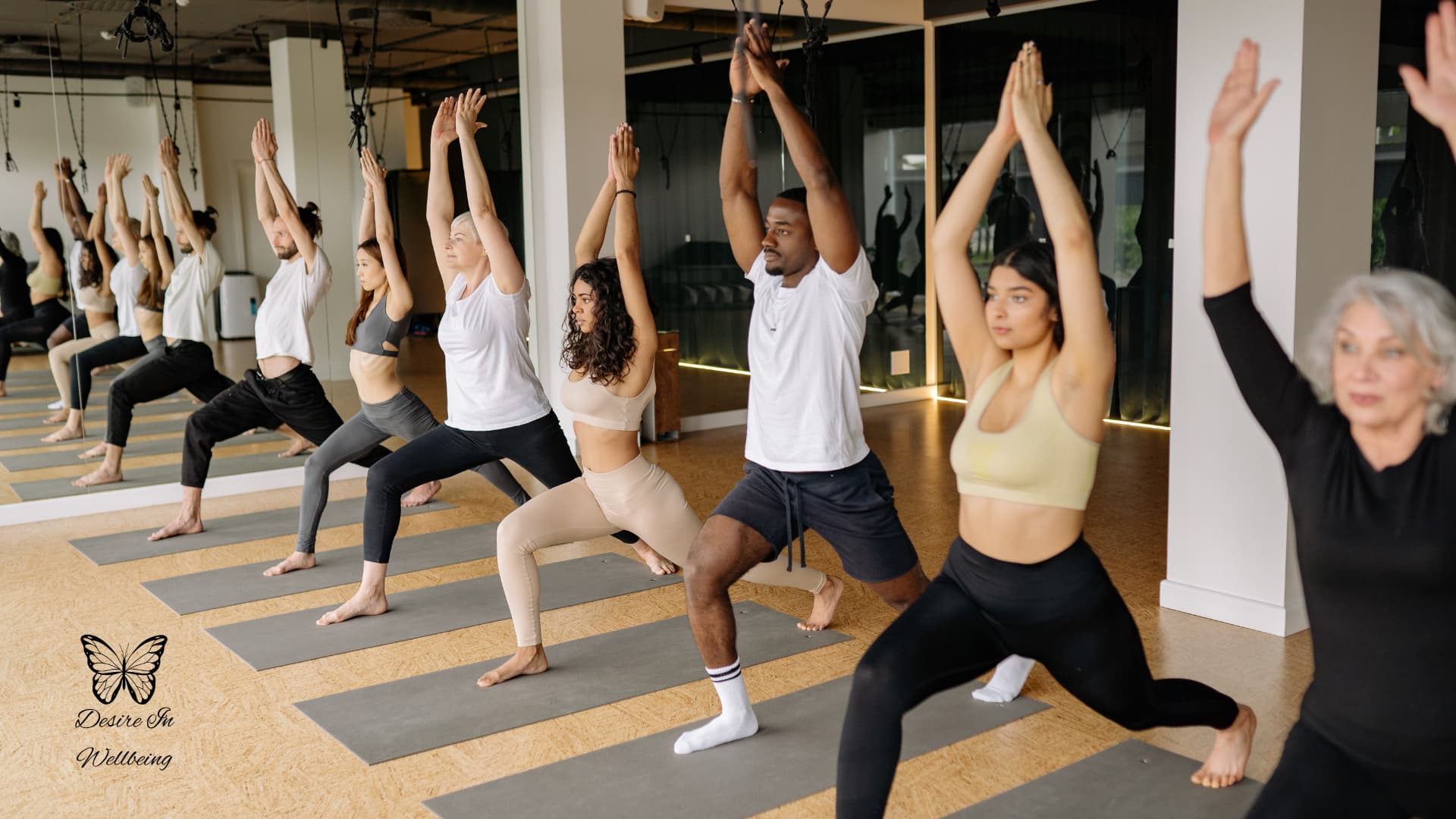
Warrior I (Virabhadrasana I) builds tremendous lower body strength while developing single-leg stability and hip flexibility. Step your left foot back approximately 3-4 feet, turn your back foot out 45 degrees, and bend your front knee to a comfortable depth, keeping it generally aligned in the direction of your toes. Square your hips forward, reach your arms overhead, and engage your back leg fully. This powerful pose strengthens your quadriceps, glutes, and calves while improving hip flexibility and developing the mental focus required for challenging positions. Stay for a few comfortable breaths, then change sides. Shorten the stance or reduce the bend if balance, knees or hips feel uncomfortable.
Warrior II (Virabhadrasana II) enhances lateral strength and endurance while opening the hips and building leg stamina. From Mountain Pose, step your feet wide apart, turn your right foot out 90 degrees and your left foot slightly in. Bend your right knee over your ankle, extend your arms to shoulder height, and gaze over your front hand. This pose challenges the legs and asks the trunk to remain upright while the feet are set wide apart. Use a shorter stance or a shallower knee bend if needed, and keep the front knee tracking in the same general direction as the toes. The pose may build endurance, but it does not replace a complete strength programme.
Triangle Pose (Trikonasana) combines lower body strengthening with deep stretching and balance challenges. Stand wide-legged, turn your right foot out, and extend your arms parallel to the floor. Reach forward with your right hand, then hinge at your hip to bring your right hand to your shin, ankle, or the floor while extending your left arm skyward. Keep both legs straight and actively engaged. Triangle Pose emphasizes hip hinging, leg engagement and a comfortable stretch through the side body. Rest the lower hand on a block or your shin rather than reaching for the floor. Avoid locking the knees or forcing the torso to rotate. It can be a useful mobility and balance challenge, but the degree of strengthening depends on how it is performed.
Chair Pose (Utkatasana) resembles a supported squat position and can challenge the thighs and glutes through a sustained hold. It is not equivalent to a loaded squat for developing maximal strength or explosive power. Stand with feet together or hip-width apart, bend your knees deeply as if sitting back into a chair, and raise your arms overhead. Keep your weight in your heels, your chest lifted, and your core engaged. This demanding pose strengthens your quadriceps, glutes, and calves while building mental resilience. Hold for a few breaths, then stand and rest. Use a shallow bend, keep a chair behind you for support, or reduce the hold if your knees or back are uncomfortable. Progress gradually rather than chasing a longer duration.
Advanced Poses for Upper Body Strength and Muscle Endurance
Chaturanga Dandasana (Four-Limbed Staff Pose) is yoga's answer to the push-up, building tremendous upper body and core strength. From plank position, shift forward slightly onto your toes, then lower your body halfway down, keeping your elbows tucked close to your ribs at a 90-degree angle. Your body should form a straight line from head to heels, hovering just inches above the ground. Chaturanga places substantial demand on the shoulders, arms and trunk. It is not essential for a healthy yoga practice. Beginners can skip it, lower the knees, or use a wall or elevated surface for a modified push-up. Avoid dropping the shoulders below elbow level or continuing when the wrists, elbows or shoulders hurt. Learn the movement with a qualified instructor before adding repeated repetitions.
Dolphin Pose strengthens the shoulders, arms, and core while building the foundation for more advanced inversions like forearm stand. From hands and knees, lower to your forearms with elbows shoulder-width apart. Tuck your toes, lift your hips high, and walk your feet toward your elbows, creating an inverted V-shape. Press firmly through your forearms and lift your shoulders away from the floor. Dolphin Pose can challenge the shoulders and upper back while lengthening the backs of the legs. Keep the neck comfortable and the shoulders away from the ears. Bend the knees or move the feet farther from the elbows to reduce intensity. Stop if you feel pressure or pain in the shoulders or neck.
Side Plank (Vasisthasana) challenges your obliques, shoulders, and stabilizer muscles while developing full-body integration and balance. From plank, shift your weight onto your right hand and the outer edge of your right foot, stacking your left foot on top. Lift your hips high and extend your left arm skyward, creating a straight line from head to feet. Side Plank can be modified by placing the lower knee on the floor or by supporting the upper hand on a wall. Keep the shoulder comfortable and the hips lifted only as high as you can control. A few breaths may be enough; there is no need to hold for a prescribed time.
Crow Pose (Bakasana) represents the gateway to arm balances, building extraordinary upper body strength, core power, and mental confidence. Squat down with feet together, place your hands flat on the ground shoulder-width apart, then set your knees on the backs of your upper arms. Shift your weight forward, engage your core intensely, and lift your feet off the ground. Crow Pose is an advanced arm balance and is optional. It places load on the wrists and shoulders and carries a fall risk. Do not attempt it without preparation, suitable instruction and a safe practice area. Beginners can build foundational strength with wall push-ups, hands-and-knees weight shifts or supported plank variations instead. No advanced balance pose is required to gain benefits from yoga.
Creating Your Personalized Yoga Practice for Long-Term Results
Building a sustainable yoga practice begins with establishing realistic goals and expectations. Start by assessing your current fitness level, identifying your primary objectives—whether that's building strength, improving flexibility, reducing stress, or all of the above—and committing to a schedule you can maintain consistently. Consistency trumps intensity when it comes to long-term results. Start with a duration and frequency you can recover from—for example, 10 to 20 minutes once or twice a week—and build gradually if you enjoy it and feel well afterward. There is no single yoga schedule proven best for everyone. Choose a style and pace that match your goals, experience and health needs. Strength and balance gains depend on the challenge, consistency and progression, not on a universal number of sessions.
Structure your practice sessions to include a balanced mix of poses targeting different muscle groups and movement patterns. A simple session can include a few minutes of gentle warm-up, two or three standing or supported poses, one comfortable core or upper-body exercise, a balance practice near a stable support, and a short cool-down. For example: begin with Cat-Cow; practice Mountain Pose and a supported Warrior variation on each side; try wall plank or hands-and-knees bird dog; practice supported Tree Pose; then finish with comfortable breathing. Adjust the sequence and duration to your needs.
Listen to your body and practice intelligently to avoid injury and burnout. Yoga should challenge you without causing pain—learn to distinguish between the productive discomfort of muscles working and the warning signals of potential injury. Never force yourself into poses, and always honor your body's current capabilities while gently working toward progress. Use props like blocks, straps, and bolsters to make poses accessible while you build strength and flexibility. Rest when needed, and incorporate easier restorative sessions between more intensive strength-building practices. This balanced approach ensures sustainable progress while minimizing injury risk.
Track your progress and celebrate incremental improvements to maintain motivation and direction. Keep a yoga journal noting which poses you practiced, how long you held them, and how you felt during and after your session. Take photos or videos periodically to document your form and progress. Set specific, measurable goals such as 'hold plank for 90 seconds' or 'perform 5 chaturangas with proper form' rather than vague aspirations. Reassess your goals quarterly and adjust your practice accordingly. Remember that progress in yoga isn't always linear—some days will feel stronger than others, and that's completely normal. The key is consistent practice, patient progression, and trust in the process. Over time, you'll develop a personalized yoga practice that not only builds remarkable strength and balance but also supports your overall health, wellness, and quality of life for years to come.
What the Research Says About Yoga, Strength and Balance
Evidence supports a measured, outcome-specific view of yoga. The U.S. National Center for Complementary and Integrative Health (NCCIH) summarizes research suggesting yoga may support balance and general wellness, while emphasizing that studies differ in style, intensity and design. A review of 15 studies in community-dwelling older adults reported improvements in balance, flexibility and muscle strength, but also noted variation between studies. These findings are encouraging, especially for older adults, but they do not mean every yoga class produces the same result.
A 2025 systematic review of randomized trials in healthy adults found low-certainty evidence that yoga may improve balance. Findings on falls and fear of falling were mixed, and evidence for bone mineral density was unclear. A newer 2026 meta-analysis of 21 studies involving 1,471 older adults found that initial analyses suggested improvements in dynamic balance and lower-limb strength. However, these effects weakened after sensitivity analysis: the adjusted dynamic-balance estimate was no longer statistically significant, and the strength estimate became borderline. The authors found a more robust improvement in quality of life, but no clear overall effect on static balance.
This is why it is more accurate to say that yoga may help some people improve selected measures of balance, mobility or strength, rather than promising that it will prevent falls or build muscle in everyone. If your main goal is increasing muscle strength, progressive resistance training with appropriately challenging loads is an important option. If your goal is balance, yoga can be one component of a wider programme that also includes functional tasks such as sit-to-stand practice, stepping and walking, as appropriate to your ability.
The World Health Organization recommends that adults include muscle-strengthening activities involving major muscle groups on at least two days per week, alongside regular aerobic activity. For older adults, varied multicomponent activity emphasizing functional balance and strength is also recommended. Yoga may contribute to these goals when the class genuinely challenges the relevant muscles and balance systems, but a gentle stretching-only session should not automatically be counted as strength training.
A Beginner-Friendly Yoga Routine for Strength and Balance
The following short routine is an example, not a medical prescription. Use a non-slip surface, keep a sturdy chair or wall nearby, and move slowly. Choose only movements that feel comfortable. If you are new to exercise, have a health condition or have had a recent injury, ask a qualified health professional or appropriately trained yoga instructor about suitable modifications.
- Arrive and breathe: Sit or stand comfortably for one minute. Let your breathing remain natural and notice how your body feels.
- Cat-Cow: From hands and knees, gently alternate between a comfortable rounded and extended spine for five slow cycles. Place padding under the knees or perform a seated version if kneeling is uncomfortable.
- Supported Mountain: Stand beside a wall or chair, feet comfortably apart. Notice your weight through both feet for five breaths.
- Supported Warrior: Step one foot back into a short stance, keep a hand on a chair if needed, and bend the front knee only as far as comfortable. Take three to five breaths, then switch sides.
- Wall Plank: Place hands on a wall at chest height and walk your feet back until your body leans forward slightly. Keep the trunk steady and breathe for three to five breaths. Step closer to make it easier.
- Supported Tree: Hold a wall or chair. Keep one foot on the floor and place the other heel against the opposite ankle, or rest the toes on the floor. Hold for a few breaths, then switch sides.
- Cool down: Sit or lie in a comfortable position and breathe normally for one to two minutes.
Repeat the routine once if it remains comfortable, but do not feel obliged to increase the number of rounds. As the movements become familiar, you might gradually increase the range of motion, the time spent in a supported hold or the number of repetitions. Change one element at a time and allow recovery between more demanding sessions.
How to Adapt Yoga for Different Bodies and Needs
Yoga is not a flexibility test, and poses do not need to look identical from one person to another. Blocks, straps, folded blankets, cushions, a wall and a sturdy chair can bring the floor closer, support balance or reduce the range of motion. A chair-based class may be more suitable for someone who cannot comfortably get down to the floor. A seated Cat-Cow, supported standing pose or gentle ankle movement can still be a meaningful way to practice.
Older adults: Choose a class that offers chair or wall support, clear instructions and time to transition between positions. Avoid rushing from floor to standing. If you have a history of falls, dizziness or significant balance difficulty, ask a clinician or physiotherapist about a suitable programme. Yoga can be part of a balance routine, but should not replace an individualized falls assessment when one is needed.
People with joint pain or arthritis: Use a smaller range of motion and avoid forcing end positions. Kneeling, deep knee bends, wrist-bearing poses and prolonged holds may need adjustment. If a joint becomes more painful during or after a session, reduce the load or stop that movement and seek advice if symptoms persist.
Pregnancy: Pregnancy changes balance, joint loading and comfort as it progresses. Ask your maternity care professional about suitable activity and choose an instructor familiar with prenatal modifications. Avoid hot yoga, overheating, positions that create a fall risk, and any pose or breathing practice your clinician advises against. Do not assume a general online sequence is appropriate for every trimester or pregnancy.
High blood pressure, glaucoma, osteoporosis or spinal conditions: Some positions—especially inversions, prolonged head-down postures, forceful breathing or deep spinal flexion and rotation—may not be appropriate for certain people. Ask your healthcare professional which movements to modify or avoid. A teacher should know about relevant limitations before class, but an instructor does not replace medical advice.
Limited mobility or disability: Adaptations may include seated poses, supported movement, shorter sequences, rest breaks or assistance from a trained professional. Focus on the movement capacity and goals that matter to you rather than comparing your practice with someone else's. If a pose causes numbness, sharp pain, unusual weakness or dizziness, stop and seek appropriate advice.
Safety: Common Mistakes and When to Stop
Yoga is generally considered safe for healthy people when practiced appropriately, but strains and sprains can occur. The knee and lower leg are among the commonly injured areas. Beginners should learn foundational movements from a qualified instructor where possible, avoid extreme positions and forceful breathing, and be especially cautious with headstands, shoulder stands and advanced arm balances. Hot yoga carries additional risks related to heat and dehydration.
- Do not force a stretch. A strong pulling sensation is not a requirement for progress. Ease out of a pose if you feel sharp, pinching or escalating pain.
- Do not hold your breath. Breathe comfortably. Stop a breathing exercise if you become light-headed, breathless or distressed.
- Do not rush transitions. Move slowly between standing, kneeling and floor positions, especially if you are older or prone to dizziness.
- Use support without embarrassment. A wall, chair or block is a useful training aid, not a sign of failure.
- Build gradually. Sudden increases in session length, intensity or difficult poses can increase soreness and injury risk.
- Choose a suitable teacher. Look for training, experience with your needs and willingness to offer alternatives. Be cautious of anyone who encourages you to ignore pain or promises to cure a medical condition.
Stop the session if you experience chest pain, faintness, unusual shortness of breath, sudden severe headache, new weakness or significant pain. Seek urgent medical attention for severe or sudden symptoms. If you have a chronic condition, recent surgery, a new injury or are unsure whether a movement is safe, ask a healthcare professional before starting or changing your practice.
Combining Yoga with Other Forms of Exercise
Yoga can complement walking, cycling, swimming, dancing and resistance training. A balanced weekly routine does not have to be complicated: combine activities that raise your heart rate with muscle-strengthening work and movements that challenge balance and mobility. The right mix depends on your health, starting point, interests and available time.
For example, a beginner might take two short yoga sessions, walk on several days and include two manageable strength sessions using body weight, resistance bands or weights. Another person may use yoga as a warm-up or cool-down around other activities. If yoga is your main activity, check whether your sessions provide enough aerobic effort and progressive muscle challenge to meet your wider goals. Gentle yoga may feel restorative without raising your heart rate substantially, and that is fine—it simply serves a different purpose.
Recovery matters. Muscle fatigue, mild temporary soreness and the need for rest can occur when you begin a new activity. Allow easier days, sleep adequately and eat regular balanced meals. Persistent pain, worsening symptoms or fatigue that interferes with daily life is a reason to reassess the plan rather than push through.
Frequently Asked Questions
Can yoga build strength?
Some styles and poses challenge muscles and can improve selected measures of strength or endurance, especially in people who are new to exercise. Results depend on the poses, difficulty, progression and consistency. For substantial strength gains, yoga may need to be combined with progressive resistance training.
Does yoga improve balance?
Research suggests yoga may improve some balance measures, including in older adults, but findings vary and certainty is not uniformly high. Use a wall or chair if needed. People at high risk of falling may benefit from an individualized programme designed with a health professional.
How often should a beginner do yoga?
There is no single evidence-based schedule for every beginner. Start with a short session once or twice a week if that feels manageable, then adjust according to comfort, recovery and goals. Regularity is useful, but pain and exhaustion are not signs of progress.
Do I need to be flexible before starting yoga?
No. Flexibility is not an entry requirement. Choose a beginner-friendly class and use props or chair-based options. A good instructor will adapt the pose to your current range of motion rather than expecting you to copy an advanced demonstration.
Can yoga prevent falls?
Yoga may improve some balance measures, but evidence that it prevents falls is mixed. People with previous falls, dizziness or substantial mobility limitations should seek advice about a tailored falls-prevention plan that may include strength, balance and home-safety measures.
Is yoga enough exercise on its own?
It depends on the style and your goals. Some classes are gentle and focus on mobility or relaxation; others are physically demanding. Many people benefit from combining yoga with aerobic activity and muscle-strengthening exercise.
Research and Further Reading
- Yoga: Effectiveness and Safety — U.S. National Center for Complementary and Integrative Health (NCCIH), covering evidence across health outcomes and safety considerations.
- Effects of yoga on physical and psychological health among community-dwelling older adults: A systematic review and meta-analysis — review of 15 studies, including findings on balance, flexibility and strength.
- Effect of yoga on balance, falls, and bone metabolism: a systematic review of randomized controlled trials in healthy individuals — 2025 review; reports low-certainty evidence for balance and mixed findings for falls.
- Effects of yoga on lower-extremity muscle strength, balance, and quality of life across diverse older adult populations: A systematic review and Meta-analysis — 2026 review; includes sensitivity analyses that qualify the strength and dynamic-balance findings.
- Physical activity — World Health Organization guidance on aerobic, muscle-strengthening and multicomponent activity.
Health disclaimer: This article is for general education and is not a substitute for individualized medical advice, diagnosis or treatment. Yoga is not appropriate in every form for every person. Modify or avoid movements that cause pain or conflict with your health needs, and consult a qualified healthcare professional if you have a medical condition, injury, pregnancy-related concern, significant balance difficulty or persistent symptoms.