
The Ultimate Wellness Checklist for Healthy Living

Desire E
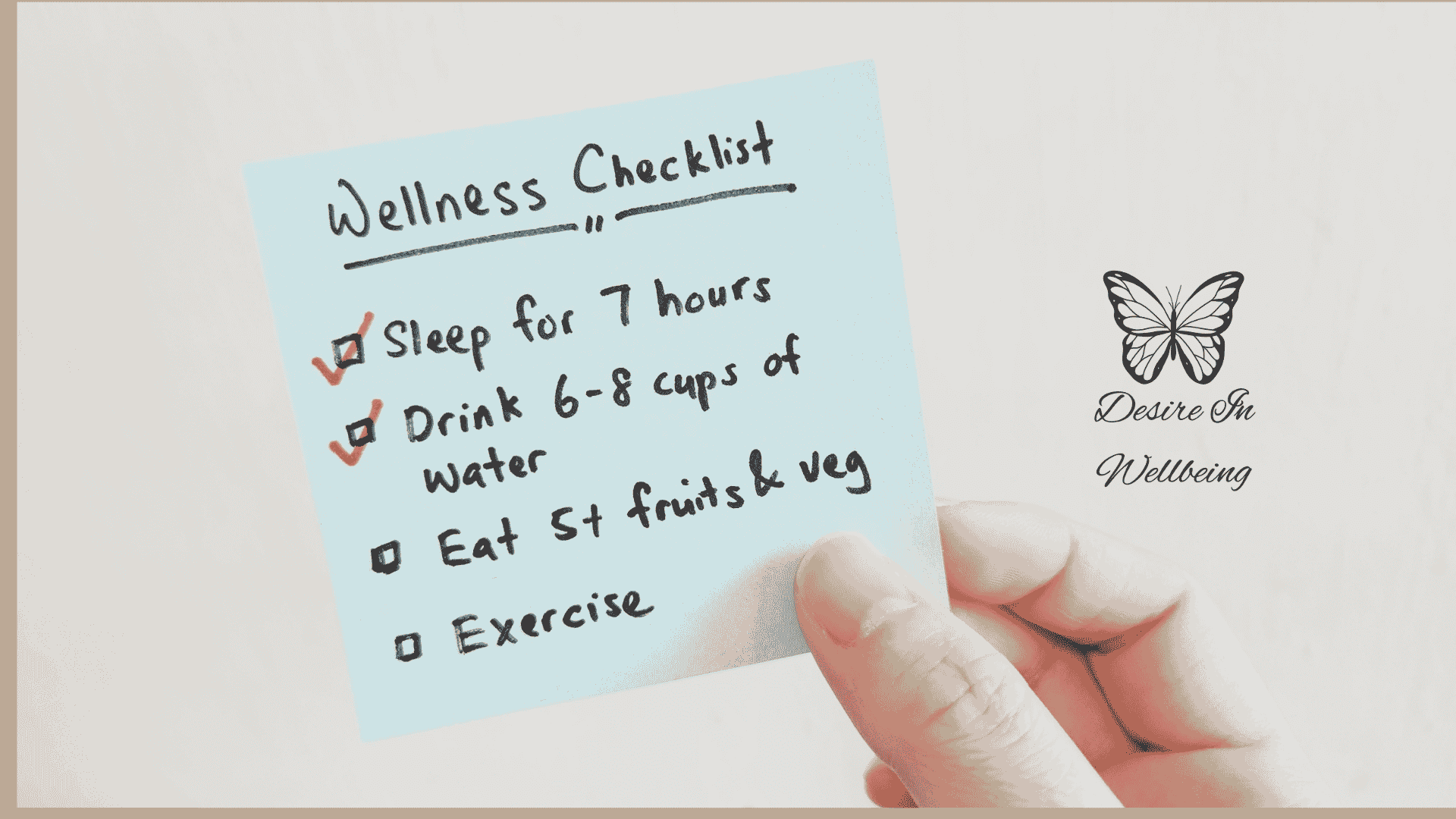
A healthier lifestyle is not built by completing every wellness trend or following a perfect daily routine. It grows through realistic choices that support your health over time: eating a varied diet, moving regularly, sleeping enough, caring for your mental well-being, maintaining supportive relationships and using healthcare when needed. This practical checklist helps you decide what matters, take manageable steps and adapt the plan to your circumstances.
Table of Contents
- How to use this wellness checklist
- Nutrition and mindful eating checklist
- Movement, strength and mobility checklist
- Sleep and recovery checklist
- Mental and emotional well-being checklist
- Relationships and social connection checklist
- Home, work and digital environment checklist
- Preventive healthcare checklist
- Building habits that last
- A flexible weekly wellness checklist
- Adapting the checklist to real life
- Frequently asked questions
- Trusted resources and further reading
How to Use This Wellness Checklist
Wellness is broader than fitness or nutrition. It includes physical health, mental and emotional well-being, relationships, the environments in which you live and work, and activities that give your life meaning. These dimensions influence one another, but they do not need to be managed perfectly or all at once.
Use the checklist as a menu of ideas, not a pass-or-fail test. You do not need to tick every box every day. Some actions are daily habits, some are weekly practices, and others—such as recommended health screenings—depend on your age, medical history and local clinical guidance. If an item is not accessible or appropriate, adapt it or leave it out.
Your circumstances matter. Work schedules, caregiving, disability, chronic illness, income, food availability, safety and access to healthcare all affect what is realistic. A wellness plan should fit your life rather than make you feel guilty for circumstances outside your control. Begin with one or two priorities that are meaningful and achievable.
A simple way to start is to ask yourself: What currently supports my health? What is making daily life harder? What small change could make the biggest practical difference? Write down your answers and choose one action to try for the next week.
Nutrition and Mindful Eating Checklist
Food provides energy and nutrients, and eating patterns are shaped by culture, preferences, affordability, health needs and food availability. The World Health Organization describes healthy diets through four principles: adequacy, balance, moderation and diversity. In practice, aim for a varied pattern that includes vegetables, fruits, pulses, whole grains or other fibre-rich staples, and suitable protein sources. No single food makes or breaks your health.
Everyday nutrition checklist
- ☐ Include vegetables and/or fruit regularly, choosing fresh, frozen or appropriately stored options that are available and affordable.
- ☐ Vary your foods across the week instead of relying on a very narrow selection.
- ☐ Include fibre-rich foods such as beans, peas, lentils, vegetables, fruit, oats, millet, sorghum, maize or other whole grains.
- ☐ Include a source of protein at meals when practical, such as beans, peas, lentils, eggs, fish, poultry, dairy foods, nuts or seeds.
- ☐ Choose unsaturated fats more often, for example from groundnuts, seeds, nuts, avocado or suitable vegetable oils.
- ☐ Limit frequent intake of foods and drinks high in salt, free sugars and unhealthy fats without treating occasional treats as a failure.
- ☐ Use safe food handling, clean water and appropriate storage to reduce foodborne illness risk.
- ☐ Notice hunger, fullness, enjoyment and comfort without turning meals into a rigid calorie-counting exercise.
A balanced meal can be built from familiar foods. Examples include beans with matooke and greens; fish with sweet potato and vegetables; millet or sorghum porridge with groundnuts and fruit; or eggs with a staple food and seasonal vegetables. These are flexible examples, not prescribed menus. Portions and food choices vary with age, activity, appetite, health conditions and personal needs.
WHO guidance for people older than 10 years recommends aiming for at least 400 grams of fruits and vegetables per day, alongside adequate dietary fibre. This is a population-level recommendation, not a reason to feel that one day of lower intake has ruined your diet. If produce is costly, use seasonal options, local greens, frozen vegetables or fruit when available. Pulses and whole grains can also contribute fibre and nutrients.
Mindful eating and meal planning
- ☐ Sit down to eat when possible and reduce distractions if they make it difficult to notice your meal.
- ☐ Eat at a comfortable pace and pay attention to hunger, fullness and satisfaction.
- ☐ Plan a few simple meals before shopping so you can use ingredients efficiently.
- ☐ Prepare useful components ahead of time, such as cooked beans, washed greens or chopped vegetables, while following safe storage practices.
- ☐ Keep convenient nourishing options available when possible, such as fruit, plain yoghurt, boiled eggs or roasted groundnuts.
- ☐ Allow flexibility for celebrations, traditional foods and personal preferences.
Avoid rules such as “never eat carbohydrates” or “all processed foods are harmful.” Food processing exists on a spectrum, and many practical foods—including frozen vegetables, canned beans and fortified staples—can support a healthy diet. The overall pattern matters more than one ingredient or meal. If you have diabetes, kidney disease, food allergies, a history of disordered eating or another condition requiring dietary care, ask a qualified health professional for individual advice.
Hydration checklist
- ☐ Make safe drinking water accessible during the day.
- ☐ Drink regularly, paying attention to thirst, heat, sweating and activity.
- ☐ Choose water often instead of sugar-sweetened drinks when that is practical for you.
- ☐ Increase attention to fluids during hot weather or prolonged physical activity, unless a clinician has advised you to restrict fluids.
- ☐ Use oral rehydration solution when appropriate for fluid loss from diarrhoea or vomiting, following health-worker or product instructions.
There is no universal requirement for everyone to drink exactly eight glasses of water per day. Fluid needs vary with climate, body size, activity, diet, pregnancy, breastfeeding and illness. People with heart, kidney or other conditions may have specific fluid instructions and should follow their healthcare professional's advice.
Movement, Strength and Mobility Checklist
Movement supports cardiovascular health, muscle and bone function, mobility, mood and daily independence. Physical activity includes planned exercise, walking, cycling, wheeling, dancing, gardening, active play, household tasks and movement at work. You do not need a gym membership or expensive equipment to be more active.
Weekly activity checklist
- ☐ Build toward 150–300 minutes of moderate-intensity aerobic activity each week, or 75–150 minutes of vigorous activity, or an equivalent combination.
- ☐ Include muscle-strengthening activity involving major muscle groups on at least two days per week, if appropriate for your health and ability.
- ☐ Break up long periods of sitting with standing, light movement or short walking breaks when practical.
- ☐ Choose activities you enjoy or can integrate into daily life, such as brisk walking, dancing, cycling, swimming or gardening.
- ☐ Increase activity gradually if you are starting from a low level.
- ☐ Include balance and functional movement practice when appropriate, particularly as you get older.
- ☐ Allow time for recovery and adjust activity during illness, injury or periods of unusual fatigue.
These adult targets come from WHO physical activity guidance. They are goals to work toward, not a threshold below which activity has no value. Doing some activity is better than doing none. Moderate activity generally makes breathing faster while still allowing conversation; vigorous activity makes talking more difficult. The right intensity depends on fitness, health and individual circumstances.
Strength training can include resistance bands, body-weight exercises, chair sit-to-stands, wall push-ups or weights. Use controlled movements and choose a challenge that allows you to maintain safe technique. Older adults may benefit from a combination of strength and balance activities. People with disabilities or chronic conditions may use adapted movement such as seated exercises, supported walking, water-based activity or rehabilitation exercises.
If you have a medical condition, significant pain, balance problems, recent surgery or concerns about exercise safety, ask a healthcare professional or qualified exercise specialist about suitable options. Stop and seek medical advice for concerning symptoms such as chest pain, fainting or unusual severe breathlessness. Do not assume that pushing through pain is necessary for progress.
Make movement easier to repeat
- ☐ Put comfortable shoes or activity clothes where you can find them.
- ☐ Link movement to an existing routine, such as walking after lunch.
- ☐ Try short sessions if long workouts do not fit your schedule.
- ☐ Invite a friend or family member if companionship makes activity more enjoyable.
- ☐ Track activity in a simple way without judging yourself for missed days.
Sleep and Recovery Checklist
Sleep supports attention, memory, mood, immune function and physical recovery. Most adults need at least seven hours of sleep per night, although individual needs vary. Children and teenagers generally need more. Sleep quality, regularity and daytime functioning are also important; a number alone does not describe the whole picture.
Sleep-supportive habits
- ☐ Keep a reasonably consistent sleep and wake schedule that fits your work and family responsibilities.
- ☐ Give yourself enough time in bed to meet your sleep needs.
- ☐ Make your sleeping space as dark, quiet, safe and comfortable as circumstances allow.
- ☐ Get daylight and movement during the day when possible.
- ☐ Notice whether caffeine later in the day affects your ability to fall asleep.
- ☐ Avoid relying on alcohol as a sleep aid; it can disrupt sleep later in the night.
- ☐ Develop a calming wind-down activity, such as reading, gentle stretching or quiet conversation.
- ☐ Reduce late-night screen use if it keeps you awake or delays bedtime.
- ☐ Make time for recovery after demanding physical or mental activity.
A comfortable bedroom temperature is personal and depends on bedding, climate and individual preference. There is no need to buy a particular mattress, replace a mattress solely because it has reached a fixed age, or use a specific device to achieve healthy sleep. Make affordable adjustments first and focus on comfort and consistency.
Persistent insomnia, loud snoring with gasping or pauses in breathing, severe daytime sleepiness or sleep problems that affect daily life deserve professional assessment. Conditions such as insomnia, sleep apnoea, pain, anxiety and medication effects may need specific treatment. Sleep hygiene can help, but it is not a substitute for care when a sleep disorder is present.
Mental and Emotional Well-Being Checklist
Mental wellness does not mean feeling happy or calm all the time. It includes recognising emotions, coping with ordinary stress, maintaining meaningful activities and knowing when to seek support. Difficult emotions are part of being human; they do not mean that you have failed at self-care.
Everyday mental well-being checklist
- ☐ Pause during the day to notice how you are feeling and what you may need.
- ☐ Identify common stressors and consider which parts you can influence.
- ☐ Use a coping activity that feels safe and helpful, such as a short walk, talking with someone, journaling or a breathing pause.
- ☐ Make room for enjoyable or meaningful activities, even in small amounts.
- ☐ Set realistic boundaries around work, caregiving and digital interruptions where possible.
- ☐ Practise self-compassion when plans change or you make a mistake.
- ☐ Seek professional support if emotional or psychological symptoms persist, worsen or interfere with daily life.
The WHO guide Doing What Matters in Times of Stress offers practical skills such as grounding, making room for difficult thoughts and feelings, acting on personal values and treating yourself with kindness. Mindfulness may be practised through meditation, prayer, mindful walking or simply paying attention to one activity at a time. It does not require an empty mind, and it is not a cure for every mental health difficulty.
Breathing exercises may help some people settle in a stressful moment, but there is no single technique that works for everyone. Breathe comfortably and stop if you feel dizzy or distressed. Avoid claims that a particular breathing pattern immediately resets the nervous system or treats a medical condition.
Journaling can help organise thoughts and notice patterns. Try writing what happened, how you felt, what matters to you and one next step. Gratitude practices may be meaningful for some people, but they should never be used to dismiss grief, hardship or legitimate concerns. Choose a reflective practice that feels supportive rather than compulsory.
When to seek mental health support
Consider speaking with a qualified healthcare or mental health professional if persistent sadness, anxiety, trauma symptoms, substance use, sleep changes or loss of interest are affecting your life. Evidence-based psychological therapies and other treatments can help, depending on the person and condition. Self-care can complement treatment but should not replace it.
If you or someone else may be in immediate danger or at risk of self-harm or suicide, seek urgent help through local emergency services or a nearby health facility, and involve a trusted person who can help keep the person safe. An online checklist is not an emergency-care resource.
Relationships and Social Connection Checklist
Supportive relationships can provide belonging, practical help, companionship and emotional support. Connection may come from family, friends, neighbours, colleagues, community groups, faith communities or safe online spaces. The goal is not to maintain a large social network; it is to build relationships that are respectful and meaningful.
- ☐ Check in with someone you care about, even with a short message or call.
- ☐ Make time for conversations where you can listen and be heard.
- ☐ Offer practical help when you have the capacity to do so.
- ☐ Join a community, hobby or volunteer activity if it feels accessible and safe.
- ☐ Communicate your needs and limits respectfully.
- ☐ Notice relationships that feel consistently unsafe or harmful and seek support where needed.
Social connection is not a quick cure for depression or loneliness, and not everyone has safe or supportive relationships available. If you feel isolated, a low-pressure first step might be a regular phone call, a community activity or reconnecting with one trusted person. If you are experiencing abuse, coercion or violence, prioritise safety and seek confidential assistance from appropriate local services.
Home, Work and Digital Environment Checklist
Your environment can make supportive habits easier or harder. Not everyone can control their housing, workplace, neighbourhood or access to green space, but small changes may still be possible. Focus on practical improvements rather than creating a perfect-looking home.
Home and workspace
- ☐ Keep drinking water and everyday essentials accessible.
- ☐ Store food safely and keep food preparation areas clean.
- ☐ Ventilate indoor spaces when safe and practical, and reduce exposure to tobacco smoke and other indoor pollutants.
- ☐ Address leaks and moisture problems promptly; avoid disturbing extensive mould without appropriate protection or help.
- ☐ Make walkways and frequently used areas safer by reducing trip hazards where possible.
- ☐ Create a comfortable place for sleep, rest or quiet activities.
- ☐ Take short movement or eye-rest breaks during long periods of desk work when practical.
Houseplants may improve the look and feel of a room, but ordinary numbers of indoor plants have not been shown to meaningfully clean the air in typical homes. Do not rely on plants instead of ventilation, source control or appropriate air filtration. Similarly, decluttering may make a space easier to use, but it is not a medical treatment for anxiety or other conditions.
Nature and outdoor time
- ☐ Spend time outdoors in a safe and accessible place when possible.
- ☐ Choose activities that suit the weather, your mobility and your health.
- ☐ Notice natural surroundings during a walk, gardening or time spent outside.
- ☐ Protect yourself from excessive heat, sun exposure, insects or other local environmental risks.
Time in green spaces can be enjoyable and may support opportunities for movement and relaxation. Research on nature exposure suggests potential benefits, but the effects vary and do not establish that a specific number of minutes outdoors will lower an individual's blood pressure, cortisol or disease risk. Treat outdoor time as one potentially helpful part of a broader routine, not a guaranteed treatment.
Digital well-being
- ☐ Turn off non-essential notifications that interrupt concentration.
- ☐ Choose device-free periods for meals, conversations or bedtime if that improves your routine.
- ☐ Review which online accounts leave you informed and supported and which leave you distressed.
- ☐ Use technology intentionally for learning, health information and connection.
- ☐ Protect personal and health information when using apps or online services.
Digital well-being is about how technology fits into your life, not about avoiding every screen. If online content increases distress or disrupts sleep, experiment with boundaries and notice whether they help. Be cautious about wellness apps that promise diagnosis or treatment without appropriate clinical oversight.
Preventive Healthcare Checklist
Healthy routines are valuable, but they do not replace medical care. Preventive healthcare includes vaccination, appropriate screening, dental care, management of ongoing conditions and timely assessment of symptoms. Recommendations vary by age, sex, pregnancy status, family history, risk factors and national guidance. There is no universal schedule of tests that every person needs every year.
- ☐ Know how to access a healthcare provider or local health facility when you need care.
- ☐ Ask which vaccinations are recommended for your age, health status, work, travel or pregnancy status, and keep a record when possible.
- ☐ Discuss which screening tests are appropriate for you and when they should be repeated.
- ☐ Seek dental care for pain, swelling, bleeding gums or other concerns; ask how often routine visits are appropriate for your individual risk.
- ☐ Follow treatment plans for ongoing conditions and ask questions when instructions are unclear.
- ☐ Tell healthcare professionals about medicines, supplements, allergies and relevant family history.
- ☐ Seek prompt advice about new, persistent or worsening symptoms instead of waiting for a routine checkup.
- ☐ Keep copies of important test results or health records if this is practical and safe.
Screening is not the same as testing everyone for everything. A screening test is offered to people without symptoms who meet specific criteria; it can have benefits and potential harms, including false positives and unnecessary follow-up. Ask about the purpose of a test, the recommended age or risk group, possible harms and what happens if the result is abnormal.
Dental care is important, but twice-yearly cleaning is not a universal requirement for every person. Visit frequency should reflect your oral health, risk and dentist's advice. Brush with fluoride toothpaste and clean between teeth when possible. Seek professional advice for pain, swelling, persistent bleeding or injury.
Vaccination schedules differ by country and personal circumstances. Consult local public health guidance or a qualified health worker rather than assuming that everyone needs the same vaccines at the same time. Supplements and products marketed as detoxes, immune boosters or guaranteed cures should also be approached cautiously. “Natural” does not automatically mean safe, and supplements can interact with medicines.
Building Habits That Last
A checklist only helps when it translates into actions you can repeat. Begin with one or two behaviours instead of attempting a complete lifestyle overhaul. Choose an action that is specific, realistic and connected to something you already do.
Make the action clear and small
Replace “exercise more” with “walk for ten minutes after lunch on three days this week.” Replace “eat better” with “add a serving of vegetables to dinner on four evenings.” A clear behaviour is easier to remember and evaluate. If it feels too difficult, reduce the time or frequency until it fits your current circumstances.
Use cues and prepare your environment
Link the new behaviour to an existing routine: after breakfast, take a short walk; when preparing dinner, wash fruit for tomorrow; after brushing your teeth, spend a minute stretching. Prepare what you need in advance. Put comfortable shoes near the door, write a shopping list or set a reminder. The purpose is to reduce friction, not to create another source of pressure.
Track progress with kindness
A notebook, calendar or simple checklist can help you notice patterns. Track actions you can influence, such as walks completed or meals prepared, rather than relying only on weight, mood or other outcomes influenced by many factors. If tracking creates guilt or obsessive behaviour, stop or choose a gentler method.
Missing a day does not erase progress. Resume at the next opportunity and consider what made the habit difficult. Perhaps the timing was wrong, the action was too ambitious or you need more support. A flexible plan is more sustainable than a perfect streak.
Review and adjust
Once a week, ask what went well, what felt difficult and what you would change. Keep habits that are helpful, adapt those that are inconvenient and let go of those that do not suit your needs. Add another action only when you have enough capacity. Your routine should evolve as your health, work, family responsibilities and resources change.
A Flexible Weekly Wellness Checklist
Use this example as a prompt, not a strict programme. It is designed to help you distribute small actions across the week. Adapt activities to your ability, local environment, schedule and health advice.
- Daily or most days: ☐ Eat a varied selection of foods where available. ☐ Drink safe fluids according to thirst and circumstances. ☐ Include some movement that suits your ability. ☐ Make time for rest. ☐ Check in with your mood and needs.
- Two or more days each week: ☐ Include muscle-strengthening activity if appropriate. ☐ Prepare or plan a few meals. ☐ Connect meaningfully with someone supportive.
- Across the week: ☐ Work gradually toward recommended aerobic activity. ☐ Break up prolonged sitting. ☐ Make time for an enjoyable or meaningful activity. ☐ Review your digital boundaries and home environment.
- As needed or according to your care plan: ☐ Attend recommended appointments. ☐ Follow vaccination and screening advice. ☐ Refill prescribed medicines in time. ☐ Ask for professional help when symptoms or concerns arise.
You may prefer to put these actions into a calendar or choose a single focus for each week. If you work shifts, care for others or have unpredictable days, use flexible time windows rather than fixed morning and evening schedules. A routine should support your life, not compete with essential responsibilities.
Adapting the Checklist to Real Life
When time is limited
Choose short actions that fit into existing activities. A brief walk, a simple meal built from familiar foods or a short phone call can be meaningful. Consider sharing household tasks or asking for help if that is possible. You do not need a long morning routine to take care of your health.
When money is limited
Focus on low-cost options: walking, dancing, body-weight movements, home cooking, seasonal foods, beans and other pulses, journaling and time with supportive people. Expensive supplements, fitness trackers, gym memberships and speciality foods are not prerequisites for wellness. Safe food, clean water and access to healthcare are important, and lack of access is not a personal failure.
When you have a disability or chronic condition
Adapt the checklist rather than forcing yourself to follow generic advice. A healthcare professional may help identify suitable movement, dietary adjustments, rest strategies or equipment. Some people need to pace activity around fatigue, pain or treatment. Your best routine is the one that supports your health and function safely.
When motivation is low
Reduce the action to its smallest useful version, choose an activity you enjoy or ask someone supportive to join you. If low motivation is persistent and comes with sadness, anxiety, loss of interest or difficulty functioning, consider professional support rather than assuming you need more discipline.
When a routine is interrupted
Travel, illness, grief, work demands and family responsibilities can interrupt even well-established habits. Start again with the next manageable action. You do not need to wait until Monday or the beginning of a new month. Review whether the routine needs to be simplified or redesigned.
Frequently Asked Questions
What should be on a daily wellness checklist?
A practical daily checklist might include eating regular, varied meals; drinking safe fluids; moving in a way that suits your ability; making time for rest; noticing your mental and emotional needs; and connecting with someone when possible. Not every item needs to happen every day, and the checklist should be adapted to your circumstances.
Do I need to complete every item to be healthy?
No. Wellness is not a score or a perfection test. Choose actions that are relevant and realistic for you. Some health needs require professional care or social support rather than another personal habit. Focus on progress and appropriate support, not checking every box.
How much exercise should adults aim for?
WHO recommends adults work toward 150–300 minutes of moderate-intensity aerobic activity per week, or 75–150 minutes of vigorous activity, or an equivalent combination, plus muscle-strengthening activity on at least two days. Some activity is better than none, and people should build up gradually according to their abilities.
How much water should I drink each day?
There is no single exact amount that is right for everyone. Needs depend on climate, activity, body size, diet and health. Drink safe fluids regularly and pay attention to thirst and heat exposure. If a clinician has advised fluid restriction, follow that advice.
How many hours of sleep do adults need?
Most adults need at least seven hours of sleep per night, although individual needs vary. Persistent sleep problems, loud snoring with gasping or significant daytime sleepiness should be discussed with a healthcare professional.
How often should I have a health checkup?
There is no single annual checkup schedule or set of tests that applies to everyone. Appropriate preventive visits and screenings depend on age, medical history, risk factors and local recommendations. Ask a healthcare professional which services are right for you.
Can houseplants clean the air in my home?
Houseplants can make a room more pleasant, but ordinary numbers of plants have not been shown to meaningfully remove indoor air pollutants in typical homes. Address pollutant sources and use appropriate ventilation or filtration where needed.
What is the easiest way to start?
Choose one action that feels useful and achievable, such as a short walk, adding a familiar vegetable to a meal or setting a consistent wake-up time. Link it to an existing routine and review it after a week. Build gradually rather than changing everything at once.
Conclusion: Make Your Wellness Checklist Work for You
A wellness checklist is most useful when it supports rather than controls your life. Nourishing food, regular movement, adequate sleep, emotional care, supportive relationships, a safer environment and appropriate healthcare can all contribute to well-being. None guarantees that you will avoid illness, and no single routine suits everyone.
Start with a small number of meaningful actions, adapt them to your needs and return to them when life gets busy. Use trusted health guidance, ask professionals about individual medical decisions and treat setbacks as opportunities to adjust. Wellness is not about doing everything perfectly; it is about building a sustainable pattern of care that works in the life you actually have.
Trusted Resources and Further Reading
- World Health Organization – Healthy diet (2026): principles of dietary adequacy, balance, moderation and diversity, including guidance on fruit, vegetables, fibre, salt and free sugars.
- WHO Guidelines on Physical Activity and Sedentary Behaviour: recommendations for aerobic activity, strengthening and reducing sedentary time.
- U.S. Centers for Disease Control and Prevention – About Sleep: sleep duration recommendations and information about sleep health.
- World Health Organization – Doing What Matters in Times of Stress: practical skills for coping with stress.
- World Health Organization – Self-care for health and well-being (2026): self-care as a complement to health services, including healthy habits and appropriate care.
- World Health Organization – Social connection: the role of meaningful relationships and social support in health and well-being.
Health disclaimer: This article is for general educational purposes only. It is not a diagnosis, medical advice or an individual treatment plan. Health needs vary with age, medical history, disability, pregnancy, medicines and other factors. Consult a qualified healthcare professional before making significant changes if you have a health condition, symptoms, dietary restrictions or concerns about exercise. Seek urgent medical help for emergencies.